
There is a particular pleasure in sitting in warm water while the weather moves across an Icelandic valley. But choosing a pool takes a little more thought than finding a beautiful photograph.
Some places are hot rivers. Others are stone pools that collect spring water, or old swimming pools warmed by a natural source. Facilities, temperatures and access can be very different. This guide covers five options and explains what each one actually is.
First, know what you are visiting
We use “natural swimming pools” as a starting point for exploring geothermal bathing. It does not mean every pool below formed without human help, or that every place has room for swimming lengths. Most are places to sit and soak.
Look at Safetravel, the weather and local notices before leaving. An old photograph or travel guide does not confirm that a trail or pool is open today. Follow closures and the landowner’s rules.
Do not enter an unknown hot spring. Geothermal water can be dangerously hot. Use established bathing areas, keep to paths and respect barriers. Natural sites may have no lifeguard.
01 Reykjadalur
- Where
- Near Hveragerði, South Iceland
- The experience
- A walk to a hot river
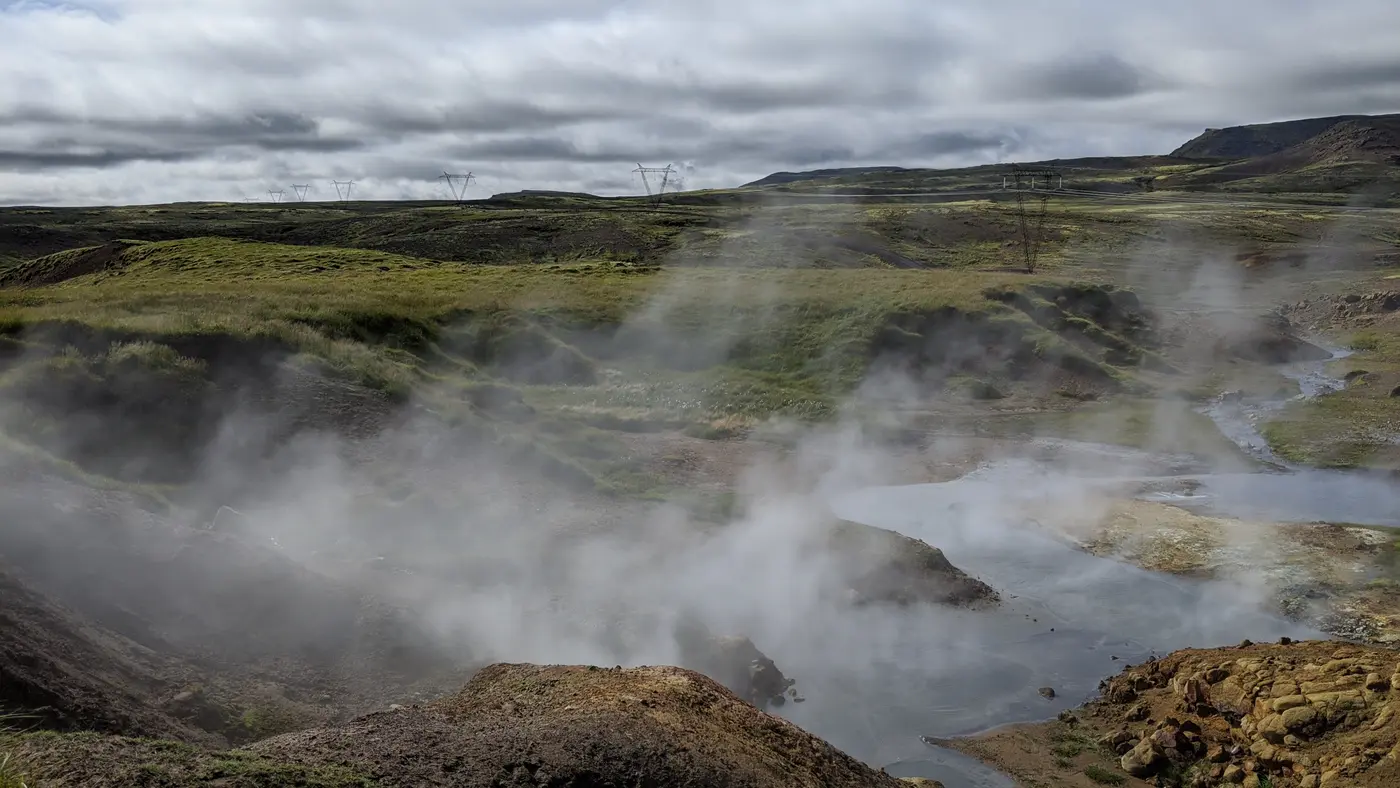
Reykjadalur is a valley walk with bathing at the end. The route passes geothermal features before reaching a river where certain stretches are suitable for a soak.
Choose it when the walk is part of the day you want. Allow time for the return journey and carry warm, dry clothing. Stay on the marked route and use the established bathing section. Steam elsewhere in the valley is not an invitation to get in.
Trails can close to protect the area or because of conditions. Visit South Iceland directs visitors to Safetravel for current access information.
02 Seljavallalaug
- Where
- South Coast, near Seljavellir
- The experience
- A historic outdoor swimming pool
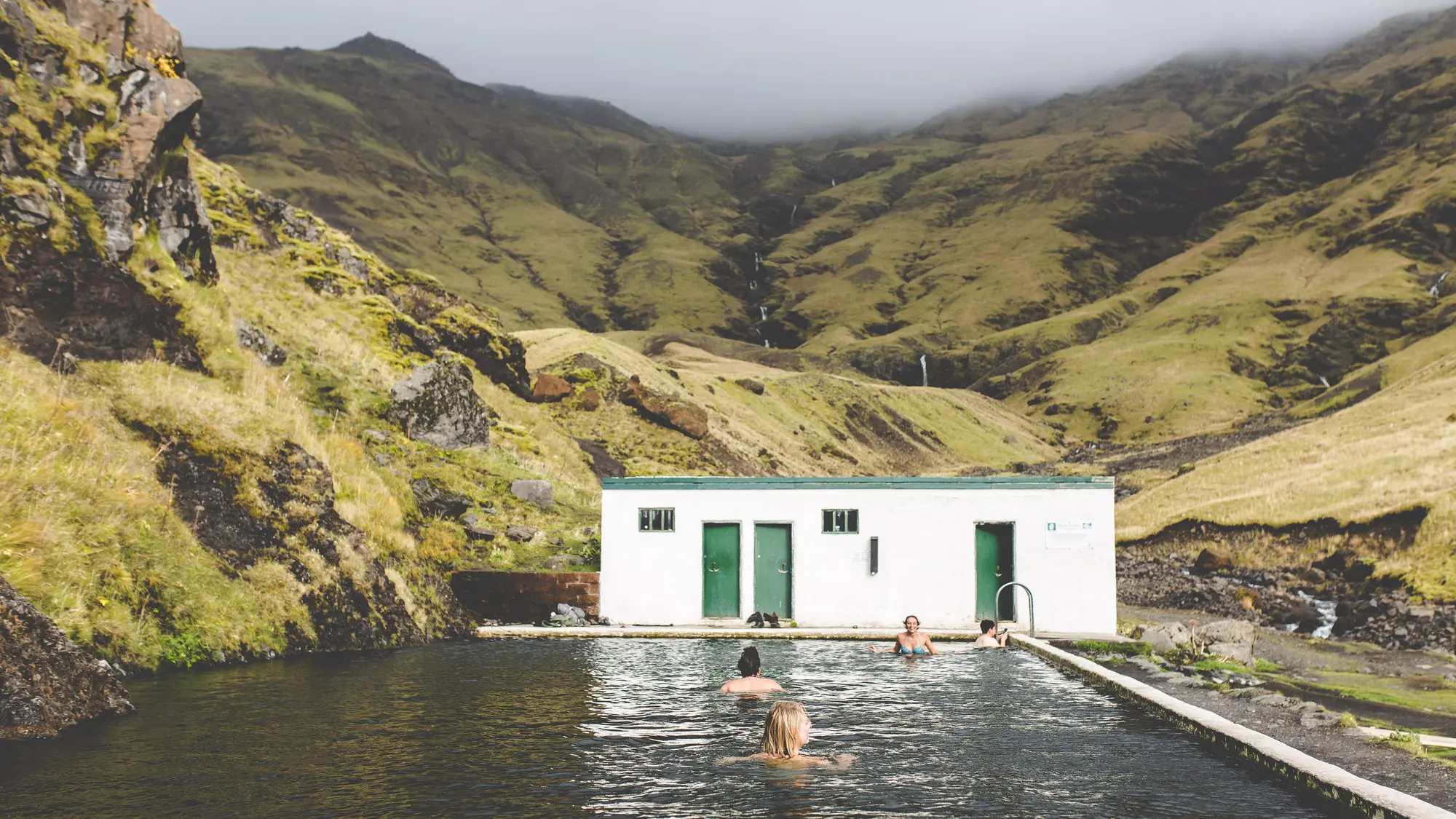
Seljavallalaug is the long, rectangular pool tucked against a mountainside in our cover photograph. Built in 1923, it is a constructed swimming pool fed by warm spring water.
It is often described alongside hot springs, but expect variable warmth rather than a reliably hot bath. The walk from the parking area usually takes about 15 to 20 minutes each way, depending on conditions and your pace.
Facilities are basic. There is a changing hut, but no shower, toilet or lifeguard. Algae can make surfaces slippery. Treat it as a simple outdoor stop and take everything you bring back out.
03 Hrunalaug
- Where
- Near Flúðir, South Iceland
- The experience
- A managed natural hot spring
Hrunalaug collects naturally heated water in small pools on privately owned land. It is a good option to consider if you want a soak without making a valley hike the main event.
It has an entrance fee, opening hours and a visit limit of 90 minutes. The owner now lists changing facilities with lockers, toilets and showers, opened in 2026. Older guides describing only a basic hut are out of date.
Check the official website for current prices and access. Glass containers and drone flights are prohibited, and entry outside opening hours is not permitted.
04 Hellulaug
- Where
- Vatnsfjörður, Westfjords
- The experience
- A small geothermal pool by the sea
Hellulaug is close to the shore in Vatnsfjörður, with a view across the fjord. Visit Westfjords describes a shallow geothermal pool reached by a path from a nearby parking area off Route 60.
The regional visitor guide lists the water at about 38°C and the depth at 60 centimetres. Treat these as descriptions, not a guarantee of conditions when you arrive.
Its small scale makes this a place for a quiet soak. Give other bathers space, follow any local notices and leave room in your plan for the journey through the Westfjords.
05 Grettislaug
- Where
- Reykir, Reykjaströnd, North Iceland
- The experience
- Geothermal pools by the coast
At Reykir in North Iceland, Grettislaug and the neighbouring Jarlslaug pair warm water with coastal views. Visit North Iceland lists showers, camping and a guesthouse at the site.
The name connects the pool to Grettir the Strong, a figure from the Icelandic sagas. The story says he warmed himself here after swimming from Drangey.
Consider this stop when your route already takes you through the north. Check with the operator for current opening arrangements, facilities and admission before making a detour.
Which one fits your day?
A useful way to choose is to begin with where you are already travelling. There is little value in rushing across the country just to squeeze in a short soak.
| Place | Setting | Keep in mind |
|---|---|---|
| Reykjadalur | Hot river | The walk and trail conditions |
| Seljavallalaug | Built swimming pool | Variable warmth and basic facilities |
| Hrunalaug | Managed spring pools | Admission and visit rules |
| Hellulaug | Shallow coastal pool | Limited space |
| Grettislaug | Geothermal pools | Current operator arrangements |
A small bag, properly packed
- A swimsuit and towel.
- Dry clothes and a warm outer layer for afterwards.
- Shoes suited to the approach, with grip for wet ground.
- Drinking water and a bag for wet swimwear.
- A way to carry every piece of rubbish back out.
Shower before entering where showers are provided, following the posted instructions. Keep soap and shampoo out of natural pools and rivers. Avoid glass, keep voices low and ask before photographing other bathers.
A few common questions
Are natural pools always free?
No. A natural water source does not mean unrestricted access. Hrunalaug charges admission and sets opening hours. Follow the rules at each location and use the owner’s current information.
Can I visit in winter?
Check the specific site, approach and weather. Icy paths, short daylight and exposed changing areas can make a visit more demanding. Do not assume a summer itinerary works in winter.
Can I swim lengths in these pools?
Most of these places are for soaking. Seljavallalaug is a swimming pool, but its facilities and conditions differ from a staffed town pool. Choose a municipal swimming pool if lanes and dependable facilities are your priority.
Is every steaming pool safe to enter?
No. Never use steam or a photograph to judge whether water is safe. Stay out of unknown springs and follow signs, barriers and local instructions.
Sources and useful links
Visitor information checked on 26 September 2026. Access, facilities and rules may change. Follow current information from the landowner or operator.
- Visit South Iceland: Reykjadalur valley
- The Garage: local information on Seljavallalaug
- Hrunalaug: official visitor information
- Visit Westfjords: Hellulaug
- Visit North Iceland: Grettislaug
- Safetravel: travel conditions and alerts
Photographs are published under CC0. View photo sources and credits.
Leave time for the place.
A pool does not have to be the most famous stop on your route to be a good one. Choose somewhere that fits your day, check the details and leave it ready for the next person.